

UN Commission on the Status of Women
The United Nations Commission on the Status of Women (UNCSW) is the principal global intergovernmental body exclusively dedicated to the promotion of gender equality and the empowerment of women. It advocates for the rights of women and girls worldwide, and is chiefly responsible for monitoring the implementation and progress of the Beijing Declaration and Platform for Action (BPfA), considered the “most progressive blueprint ever for advancing women’s rights.” The UNCSW aims to address structural barriers that prevent women from speaking up, eliminate discriminatory laws, policies, and practices, and in place of them, build inclusive and equitable legal systems.
OVERVIEW
The topic for this council is “Addressing Gender-Based Violence in Post-Conflict Settings”.
In the aftermath of armed conflict, the end of war is far from a guarantee of safety for women and girls.
Gender-Based Violence (GBV) is crucially distinct from regular violence in that the gender of the perpetrator and the victim plays a central role in not only the motive of the act, but in society’s perception or condonation of it. The unique circumstances of a post-conflict state render girls and women especially vulnerable. This is due to a multitude of reasons: During civil conflict, GBV is often weaponised by armed forces to humiliate, dominate or instill fear in civilians. Post-conflict, this legacy of mass sexual abuse desperately needs to be addressed, but in times of instability, women and girls lack access to education, safe shelters, health providers and legal support.
Furthermore, large-scale survivors’ reparations and support programmes fail to include comprehensive support for survivors of GBV. Disarmament, demobilization, and reintegration (DDR) programming, which supports former combatants returning to civilian life, may lack psychosocial support — the presence of these soldiers with a norm of violence then poses a threat to women and girls. Mass displacement and breakdown of community, combined with the existing gender disparities of the post-conflict state, allow GBV to persist and intensify.
Meet The Chairs
_JPG.jpg)
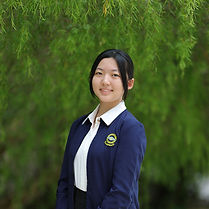
Liu Yinuo
Yinuo is a JC1 student from Hwa Chong Institution. Outside of her countless commitments, you may find her collecting new plushies and hanging them on her bag with over 20 hanging off like a mobile zoo (they weigh more than the things in her bag itself)!! She is very honoured to return to her secondary school, Nanyang Girls’ High School, and chair UNCSW which has always been her dream council. She hopes that all delegates have a fruitful experience and forge new friendships at BYMUN 2026!
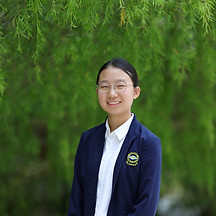
Phan Yi En
Yi En has always had a passion for the humanities and languages. A proud student of the Humanities Programme, she takes Advanced History, Advanced Literature and French. If it were possible, she would love to learn every language in the world! As a Secondary 4 student in Nanyang Girls’ High School, she is likely to be found running around the school for various duties, spending time with her wonderful classmates, snapping photos of school events with her beloved camera, or scribbling down never-ending to-do lists in her planner (paper>digital!). Despite being introverted at heart, she loves being with people, and looks forward to meeting everyone. She is honoured to be chairing UNCSW, and wishes all delegates a great time at BYMUN 2026.

Tan Si Ting
Si Ting is a Secondary 4 student from Nanyang Girls’ High School and is an ISFP. Me-time is an important aspect of her life and you can often see her curling up at home watching Chinese dramas and variety shows. There was once she binged-watch 12 episodes in a day! (#addiction)
In her recent trip to China, her love for photography sparked. Since then for 14 days straight, she’s been inseparable from her camera, capturing snapshots of life which makes up a whole memory lane.
In BYMUN 2026, Si Ting is delighted to explore a new perspective of being Chair of UNCSW and hope to facilitate intimate and meaningful discussions during the conference!